
Ears
Developing sophisticated listening skills, auditory perception, and transposing through musical training.

The Sophisticated Listener
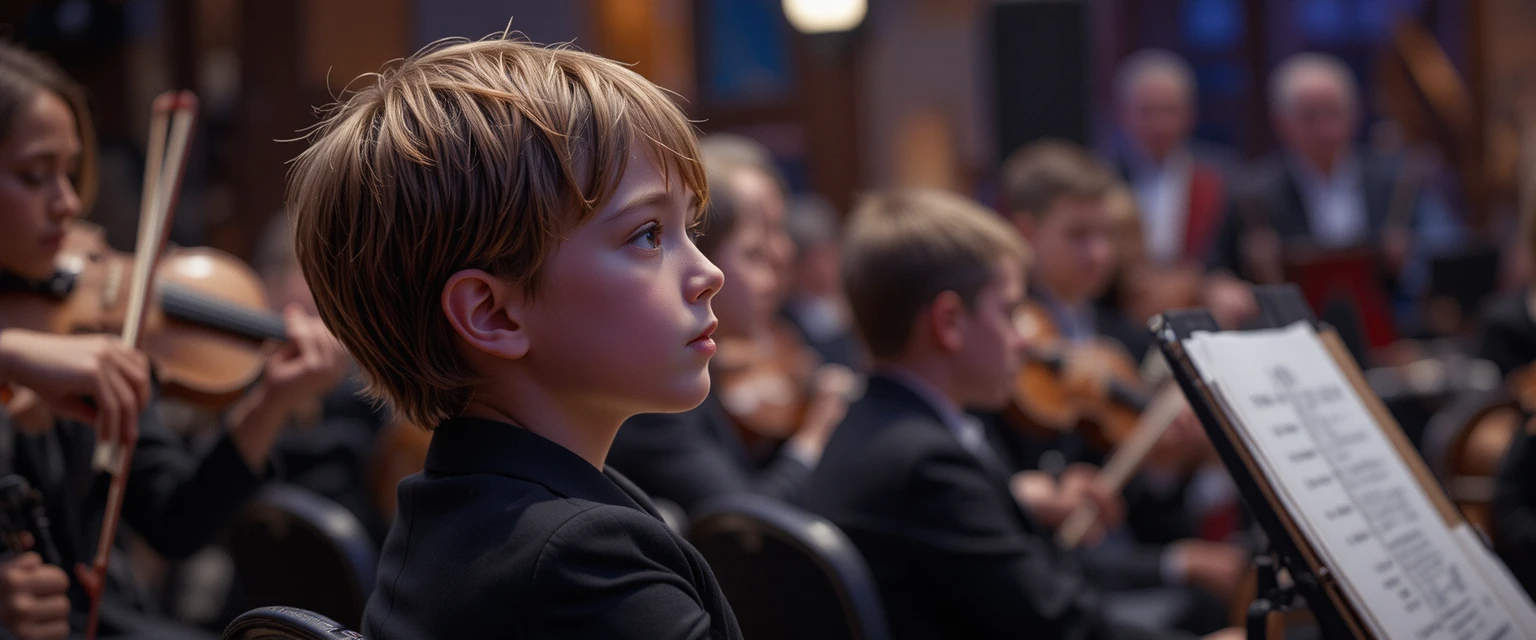
Adults with musical training experience music fundamentally differently than those without.
This sophisticated listening transforms music from pleasant background sound into a rich, engaging experience—a source of lifelong enjoyment and meaning. Piano training literally rewires the brain for enhanced auditory perception.
What Trained Ears Hear
Musically trained individuals perceive layers and nuances that others miss entirely
Harmonic Progression
Understanding how chords move and relate to each other
Contrapuntal Lines
Following multiple melodic lines simultaneously
Voice Leading
Hearing how individual notes transition between chords
Structural Elements
Recognizing musical form and design
Interpretive Choices
Appreciating artistic decisions in performance
Stylistic Nuances
Distinguishing between genres and performance styles
Auditory Brain Benefits
Enhanced Auditory Cortex
Piano training develops the brain region responsible for superior sound discrimination, allowing for nuanced perception of pitch, rhythm, and timbre.
Sound Discrimination
Musicians develop the ability to distinguish subtle differences in sound that non-musicians cannot detect, enhancing listening skills across all contexts.
Dynamic Sensitivity
Ear training develops sensitivity to louds and softs (dynamics), allowing performers to catch subtle pitches and tones and make real-time adjustments.
Phonological Awareness
Music training enhances language development through improved phonological awareness, vocabulary development, and reading fluency.

Real-Time Auditory Processing
When playing piano, ears must constantly catch subtle pitches and tones, triggering small adjustments in real-time. This develops incredibly refined auditory processing abilities.
The pianist's brain must simultaneously process the sounds being produced, compare them to the intended musical result, and send corrective signals to the hands—all happening in milliseconds.
This continuous feedback loop between hearing and playing creates neural pathways that enhance auditory perception in all areas of life, from understanding speech in noisy environments to appreciating the subtle nuances in all forms of audio.
The Listening Advantage
- Catch subtle variations in pitch
- Perceive rhythmic nuances
- Distinguish tonal colors
- Process multiple audio streams
- Enhanced speech perception
The Music-Language Connection
Research shows that musical ear training directly enhances language abilities
Phonological Awareness
Distinguishing sounds in language
Vocabulary Development
Enhanced word recognition and retention
Second Language Acquisition
Easier learning of new languages
Reading Fluency
Improved reading speed and comprehension

“Neuroscientific studies have shown that music engages distributed brain networks involved in attention, musical rhythm, memory, and emotional processing.”