
Exercises
Building coordination, cognitive speed, and musical skill through deliberate practice of scales, patterns, and repetitive sequences.
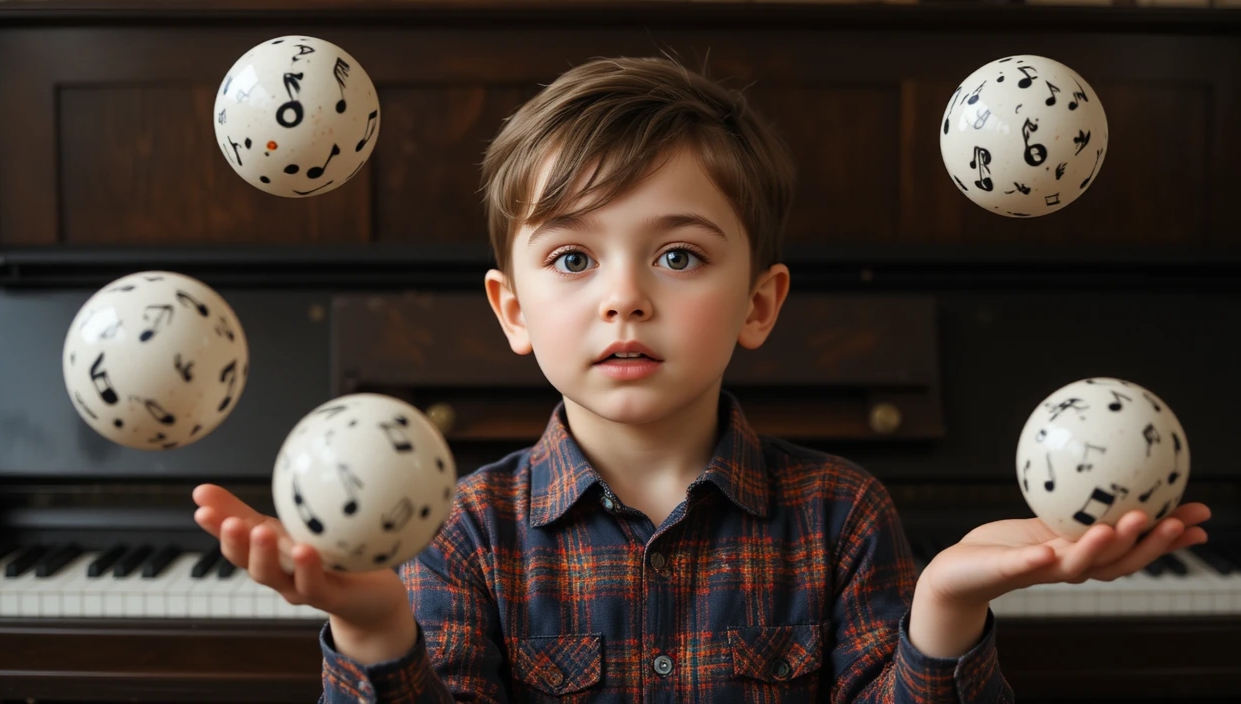
The Coordination Revolution
Piano playing demands coordination at a level that rivals, or surpasses, many other human activities. It's difficult to say how many mental operations your brain is processing at once during piano playing, but it is a relatively complex set of calculations, articulations, and the execution of movements. There are not too many human activities that approach this level of rapid cognitive processing.
What Piano Coordinates
Bilateral Coordination
Playing piano requires your left and right hands to do completely different things at the same time—different rhythms, melodies, or dynamics—while your brain seamlessly coordinates it all.
Visual Processing
Eyes quickly dart between two staffs of musical notation, deciphering different notes for treble and bass clef—like reading two different languages simultaneously.
Auditory Feedback
Ears catch subtle pitches and tones, triggering small adjustments in real-time for dynamics (louds and softs) and expression.
Motor Control
Fingers, hands, and foot pedal work together while maintaining bi-manual sync across potentially 6+ fingers playing at once.
Building Mental Agility
Regular piano practice is essentially high-intensity interval training for the brain

Building Mental Agility
Regular piano practice is essentially high-intensity interval training for the brain
Faster Comprehension
Improved processing speed enhances reading
Pattern Recognition
Quicker mathematical problem-solving
Information Integration
More efficient studying and learning
Better Recall
Improved test performance
Recommended Practice Routines
Age-appropriate practice durations to build habits and maintain engagement
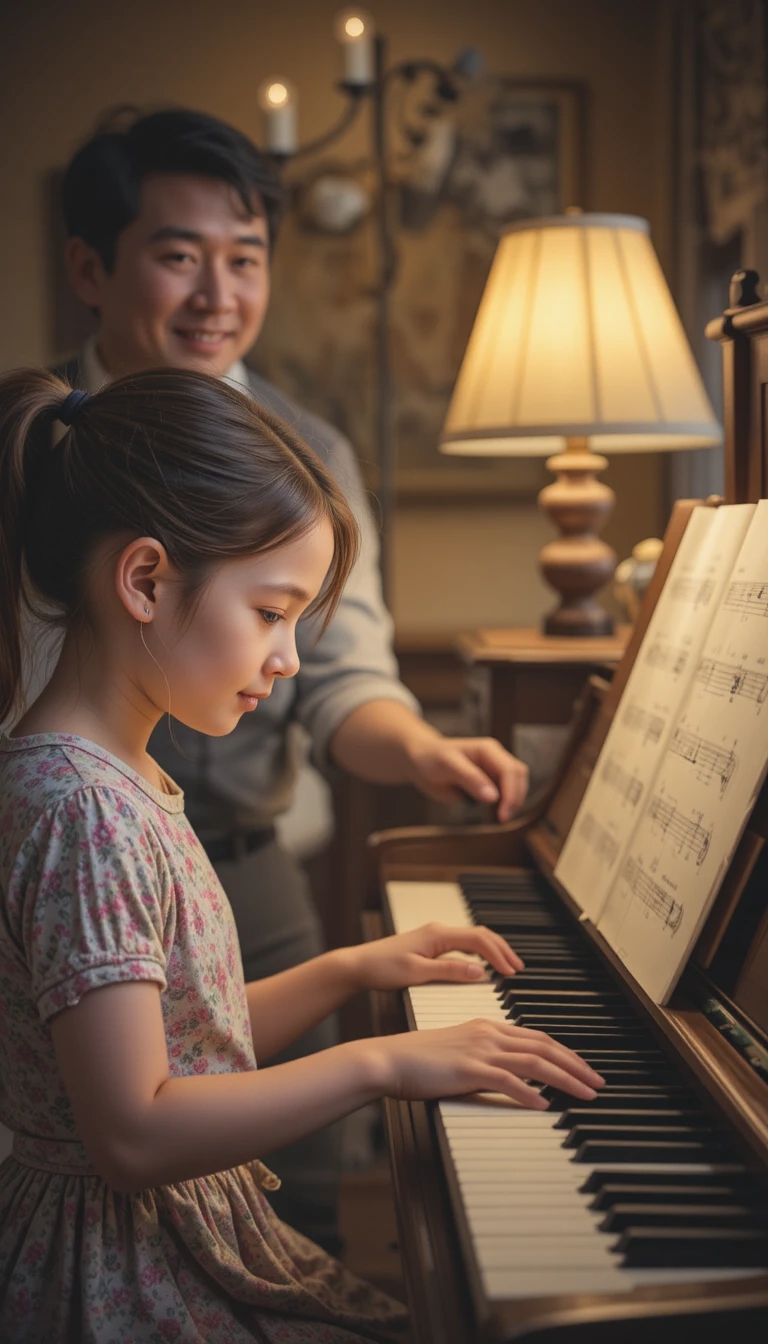
Recommended Practice Routines
Age-appropriate practice durations to build habits and maintain engagement
4-6 years
Short, focused sessions to build initial habits
7-9 years
Expanding repertoire and technical skills
10-13 years
Developing more complex pieces and musicality
Creating the Right Environment
The practice environment plays a crucial role in developing good habits and ensuring consistent progress.
- Quiet space with limited distractions
- Good lighting for reading music
- Comfortable seating at the proper height
- Music organized and accessible
- Clear insert binders for worksheets
Supportive Involvement
Show Interest
Ask about what they're learning and celebrate progress
Attend Lessons
Occasionally attend to understand expectations
Maintain Perspective
Focus on long-term development, not daily perfection
Establish Expectations
Practice should be non-negotiable, like homework
“My philosophy in private lessons is to start with short music passages and exercises, to beginner books, and flash card notation study, to early intermediate progressions, to Classical Sonatinas by Clementi, Beethoven, and Kuhlau, Inventions by Bach, to mixtures of pop, jazz, world music, blues, rhythmical elements, or any styling that gains traction. It's a passage of time, process.”— Francis Steeno's Teaching Philosophy