

Piano Benefits
Discover how piano education transforms cognitive development, academic performance, and life fulfillment.
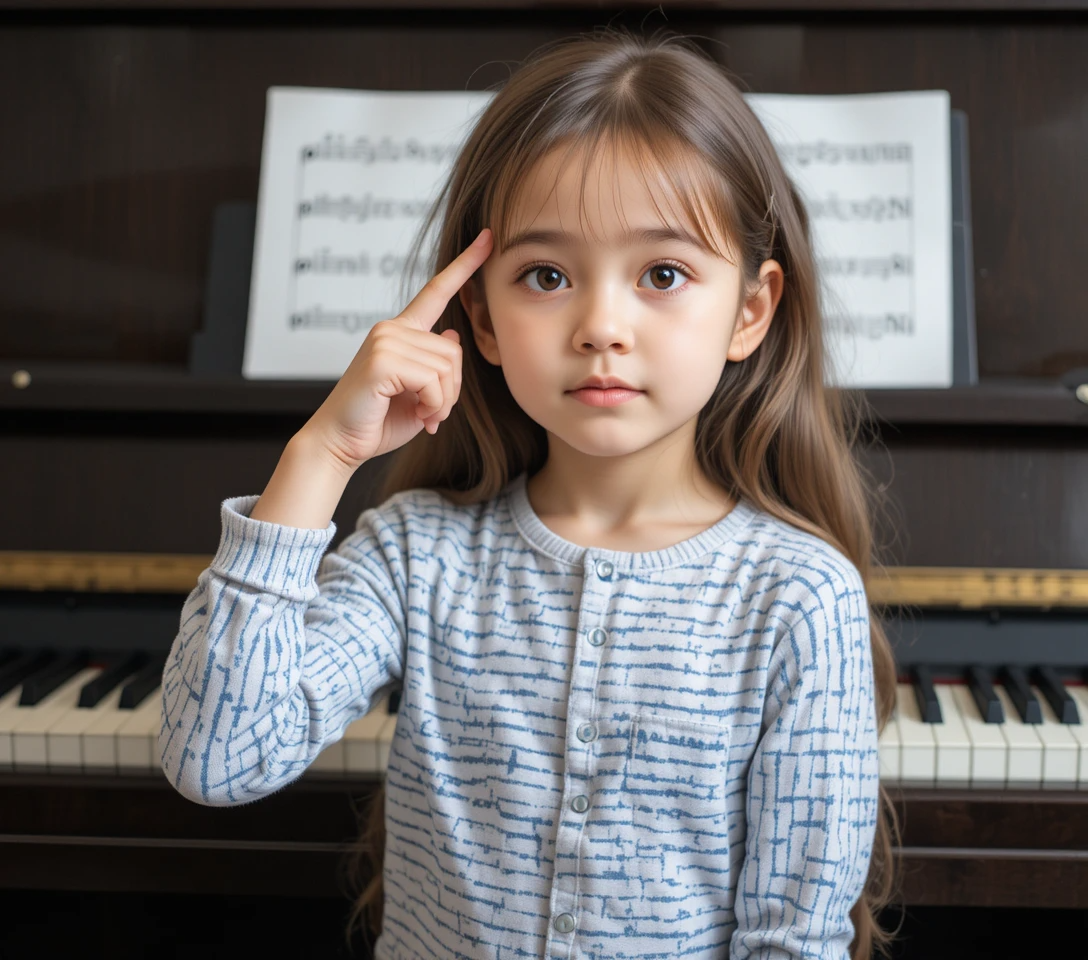
The Hidden Power of Piano Education
Children who study piano don't just become better musicians—they become better learners, better thinkers, and more confident, capable individuals across many areas of their lives.
According to Costa-Giomi's multi-year piano study, children scored higher on tests of general cognitive enhancement, spatial measures, attention, and memory. Neuroscience research supports these observations, indicating that learning to play the piano may increase connectivity in the brain, particularly in the corpus callosum.
Cognitive Benefits
Decades of research have documented piano training's transformative effects on the brain
Enhanced Executive Function
- Working memory capacity
- Attention control and focus
- Cognitive flexibility
- Planning and organization
Academic Achievement
- Higher standardized test scores
- Better grades across subjects
- Improved reading comprehension
- Enhanced mathematical reasoning
Language Development
- Phonological awareness
- Vocabulary development
- Second language acquisition
- Reading fluency
Spatial-Temporal Reasoning
- Mental rotation tasks
- Spatial visualization
- Mathematical problem-solving
- Engineering and architectural thinking

Neurological Evidence
Brain imaging studies reveal structural and functional differences in musicians
Structural Changes
- Increased gray matter volume
- Enhanced white matter integrity
- Larger corpus callosum
Functional Advantages
- More efficient neural processing
- Enhanced connectivity
- Superior auditory discrimination
Transfer Effects
Perhaps most importantly, research demonstrates that benefits transfer beyond music. Musical training enhances performance in non-musical domains, cognitive advantages persist even after training ends, and active music-making (not just listening) drives neuroplastic changes.
Character & Social Benefits
Self-Discipline
Regular practice teaches commitment and follow-through toward long-term goals.
Delayed Gratification
Students learn that meaningful achievement requires sustained effort over time.
Resilience
Mastering difficult passages teaches that struggle is part of growth.
Social Skills
Performance and collaboration build confidence and interpersonal abilities.
“Piano lessons aren't primarily about music; they're about building fundamental capacities that transform how children approach every challenge.”— Francis Steeno

The Investment Decision
High Return
Cognitive and character benefits that compound over time
Broad Application
Skills that transfer across all domains
Lasting Value
Neurological changes that persist throughout life
Intrinsic Rewards
Immediate enjoyment from music making
Accessible Entry
Reasonable cost compared to many activities